
English| EUR
Suggested for you
More currencies
Choose a language
Tauranga sits at the edge of one of New Zealand's most active marine mammal corridors. Between November and May, common and bottlenose dolphins move through the Bay of Plenty in pods that can number over a hundred individuals. This guide covers when, where, and under what conditions you can join them in the water.
Quick answer
Yes, you can swim with dolphins in New Zealand—specifically in Tauranga's Bay of Plenty during the November to May season. Tours operate from Tauranga Bridge Marina under strict Department of Conservation guidelines that limit swimmer numbers, require passive observation, and prohibit feeding or chasing. Encounters depend on dolphin behavior; operators cannot guarantee interaction, and all swimming occurs under trained guide supervision with marine mammal permit compliance.
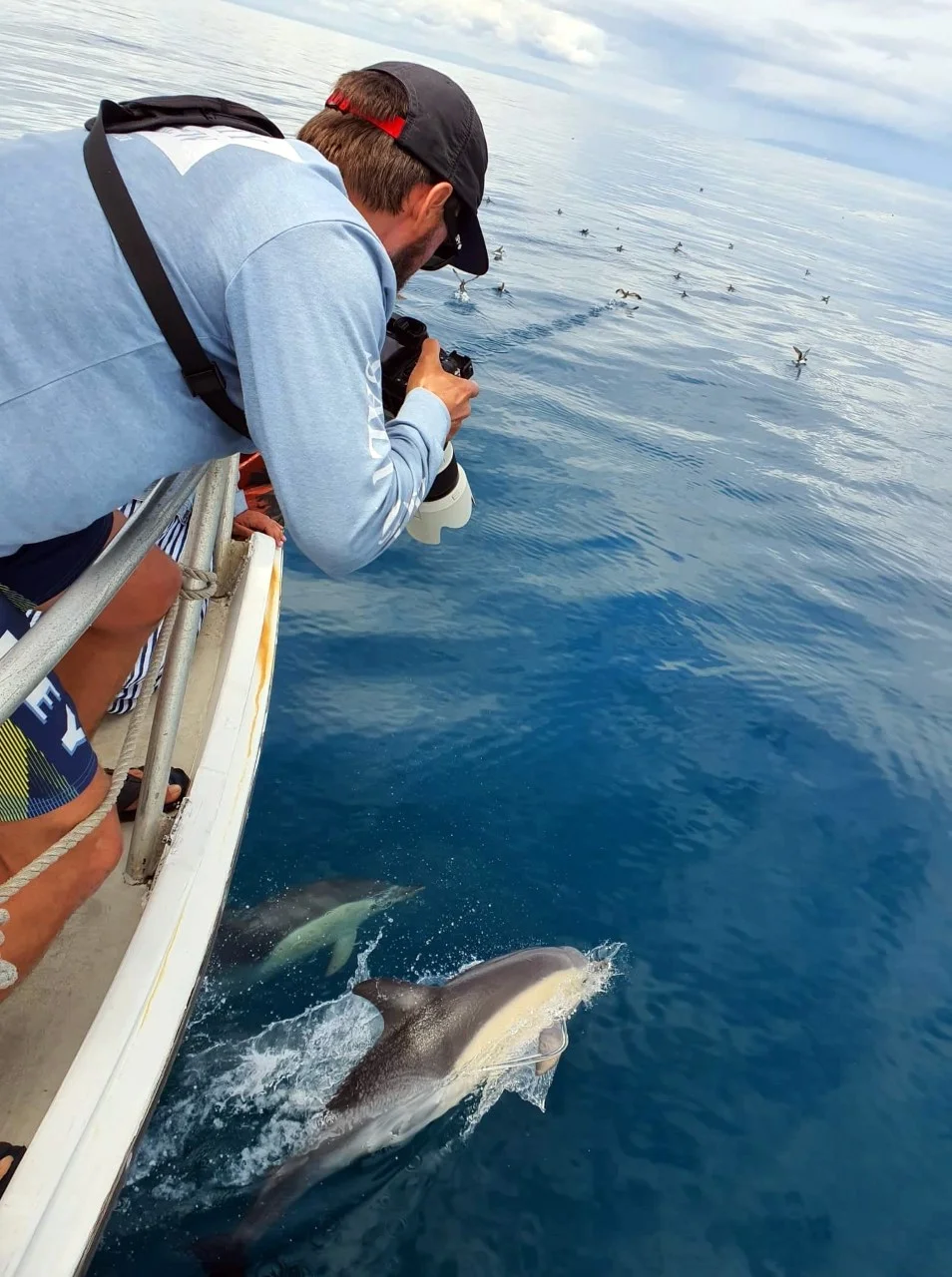
The Bay of Plenty earns its name. Each summer, nutrient-rich currents draw baitfish into the coastal shelf between Mount Maunganui and Matakana Island, and dolphins follow in numbers that make Tauranga one of the Southern Hemisphere's most reliable encounter zones. Can you swim with dolphins in New Zealand? The answer hinges on a framework built by the Department of Conservation in the 1990s, when unregulated tourism began stressing pod behavior. Today, permitted operators work under a code that treats every dolphin as a wild animal with agency: if a pod swims away, the encounter ends. If dolphins approach swimmers and linger, guides allow passive observation for a set window before returning guests to the vessel. No touching, no pursuit, no acoustic lures. Compliance is tied to permit renewal, so the rules hold. Common dolphins—the smaller, faster species with hourglass flank markings—make up the majority of sightings. Bottlenose dolphins, larger and more coastal, appear less frequently but stay longer when they do. Both species are curious under the right conditions, particularly early in the season when water clarity peaks and sea surface temperatures climb past eighteen degrees Celsius. Juvenile dolphins show the most interest in swimmers, circling at arm's length before rejoining the pod. The operational window reflects biology, not arbitrary tourism scheduling. Dolphins migrate through the Bay of Plenty during the warmer months, following pilchard and anchovy schools that spawn in nearshore waters. By June, most pods have moved north toward the Hauraki Gulf or east into open ocean. Tour operators launch from Tauranga Bridge Marina on State Highway 2, running three-hour excursions that combine dolphin search time with snorkeling over volcanic reef structure when marine mammals are not present. Sightings occur on roughly seventy percent of departures during peak season, but interaction—the moment dolphins choose to engage rather than pass—happens on fewer than half of those trips. The experience operates entirely on the dolphins' terms, which makes it unpredictable in the way that genuine wildlife encounters are. You enter their environment as a guest, under rules designed to keep it that way.
“You enter their environment as a guest, under rules designed to keep it that way.”
The optimal time to experience dolphin encounters in Tauranga is between November and May, when favorable sea conditions and wildlife migration patterns align. Morning departures are consistently preferred to ensure superior visibility and calmer water states.
18°C–24°C; warm and settled conditions
This is the designated operational season for wildlife encounters. Sea conditions remain most stable during these months.
20°C–25°C; peak summer warmth
Warmer water temperatures attract higher marine activity. High demand necessitates planning ahead for these peak months.
—
Tours typically depart in the morning for better sea conditions and visibility. Choosing mid-week slots often provides a quieter experience on the water.
Verdict: The best opportunity to swim with dolphins occurs during weekday mornings within the primary season of November to May.
The tour office in Tauranga operates on a consistent daily schedule throughout the week to assist with inquiries and departures.
Dolphin tours depart from the Tauranga Bridge Marina, located at State Highway 2, Berth D1, Tauranga 3110, New Zealand. The marina is most easily accessed by private vehicle or taxi from the Tauranga city center.
State Highway 2 to Tauranga Bridge Marina
Direct to Berth D1, Tauranga Bridge Marina
Route 802 to Tauranga Bridge Marina stop
Tours typically depart in the morning for better sea conditions and visibility, so plan your arrival within the 09:00–12:00 window. Parking is available within the marina complex for those driving.
New Zealand enforces strict marine mammal protection regulations to safeguard dolphin welfare. Operators follow Department of Conservation guidelines that dictate swimmer behavior, vessel proximity, and interaction protocols during encounters.
Everything you need to know about can you swim with dolphins in new zealand
Yes, you can swim with dolphins in new zealand by booking trips that depart from Tauranga. These encounters provide opportunities to interact with marine life in their natural ocean habitat. Participants often find that local Tauranga dolphin tours are well-organized and focus on safety. Many visitors ask if they can swim with dolphins in new zealand throughout the year, but trips are seasonal. Please note that wildlife tours are available specifically from November to May to ensure optimal conditions. You can check the official site for the most current schedule information. The entrance fee for a wildlife tour is 165 NZD per adult. This fee covers your participation in the guided excursion during the operating season. Travelers looking for a Tauranga marine adventure should plan for this standard cost. It is recommended to arrive within the best arrival window of 09:00–12:00. Tours typically depart in the morning for better sea conditions and visibility. Arriving during this period helps ensure a smooth start to your day at sea. While you can swim with dolphins in new zealand as part of a group, age and swimming ability requirements may apply to ensure safety in open water. Please review the specific operator guidelines regarding child participation before booking. It is important to confirm that all participants meet the necessary physical requirements for ocean swimming. To prepare for your Tauranga boat trip, bring swimwear, a towel, and sun protection. Wearing layers is advisable as sea temperatures can fluctuate during the excursion. Do not forget a camera to capture memories of your time on the water. The departure point for these tours is the Tauranga Bridge Marina, located at State Highway 2, Berth D1, Tauranga 3110, New Zealand. This facility serves as the primary hub for marine departures in the area. Please ensure you allow enough time to navigate to the marina before your scheduled departure.
Tauranga Dolphin Cruises
Read more Tickets & toursTauranga Dolphin Tour Options
Read more Tickets & toursTauranga Dolphin Watching Tours
Read more Tickets & toursBoat Tours in Tauranga
Read more Tickets & toursTauranga Dolphin Wildlife Cruise
Read more GuideHow Much Are Dolphin Tours?
Read more GuideIs Tauranga Worth Visiting?
Read more Tickets & toursTauranga Dolphin Swim Experiences
Read more Tickets & toursWhale and Dolphin Watching in Tauranga
Read more